
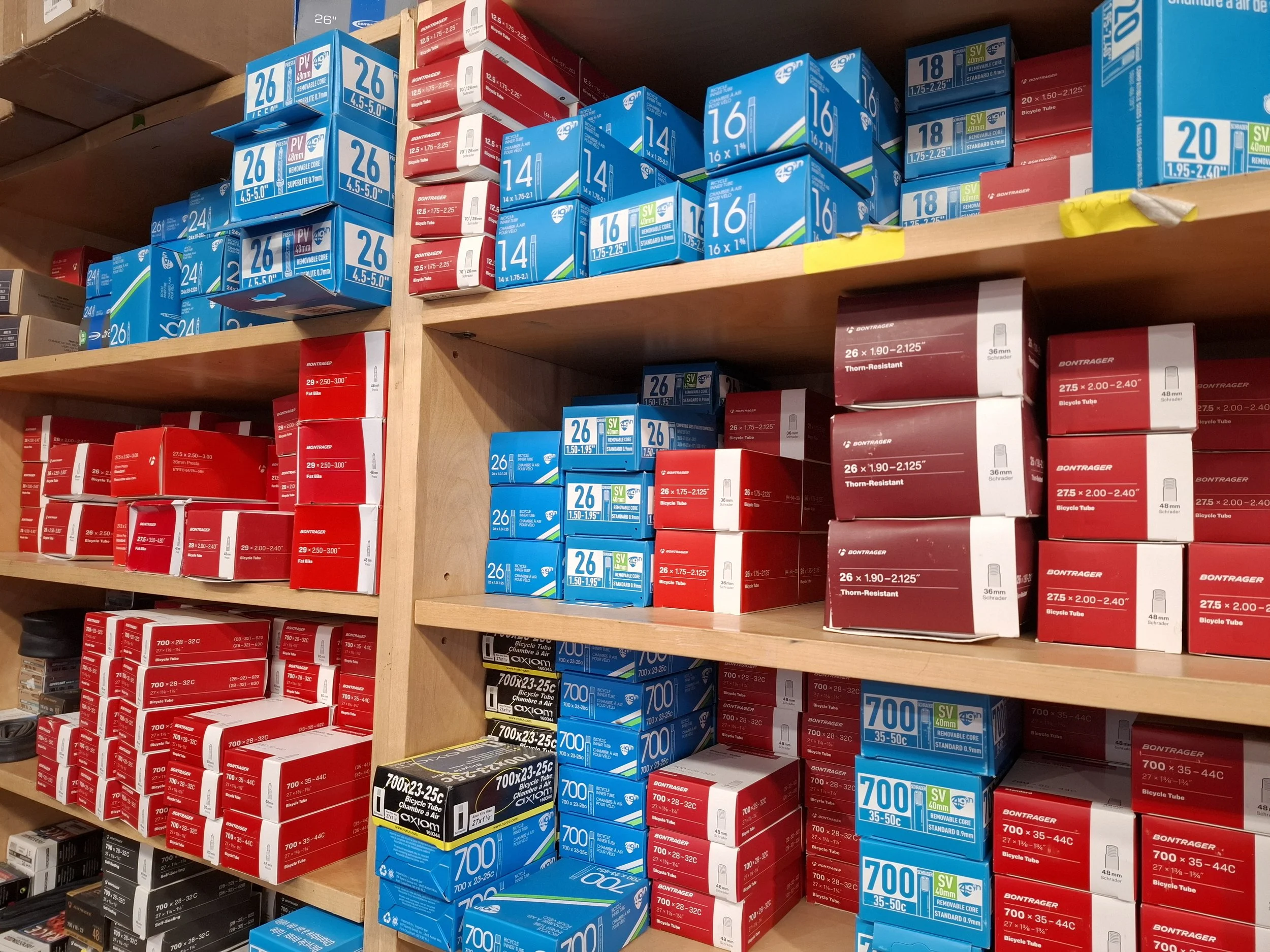
Need Parts?
We are more than happy to provide you with parts for any repair you wish to do yourself. For us to best help you there are some pieces of information we could use to ensure you get the correct parts. Below you will find commonly replace parts and what info is needed to determine the correct replacement.
Tires and Tubes
Tires
Size:
The size of the tire is usually printed on the sidewall of the tire. It can be in large lettering painted on or stamped into the rubber, usually there will also be other info stamped in a similar manner including rotation direction and inflation pressures. Size is commonly in the format of 00×0.0 or 00-000. Either of these will allow us to help you select an appropriate size for a new tire.
Note - Fractionals:
If the size is written as 00×0-0/0 this is a fractional tire. This is a different size than the equivalent regular size of tire. For example a 26×1-1/2 fractional is a different size than regular 26×1.5.
Tubeless Tires:
Not all tires are designed for tubeless use. If you have a tubeless setup it is important to get a tubeless tire otherwise it is likely that the new tire will lose air quickly or may fail to seat on the rim. If you have a hookless rim you will need a tubeless compatible tire even if you are not running tubeless.
Wider Tires:
The maximum size of tire a bicycle can take is determined by the frame and fork clearances. Usually this will be listed on the manufactures website. If you do not know the size limit for your frame we recommend bringing the bike in with you so we can help pick out a width that should work for your bicycle. Be aware that running a tire that is too wide can cause wear to the frame that will render it unsafe to ride.
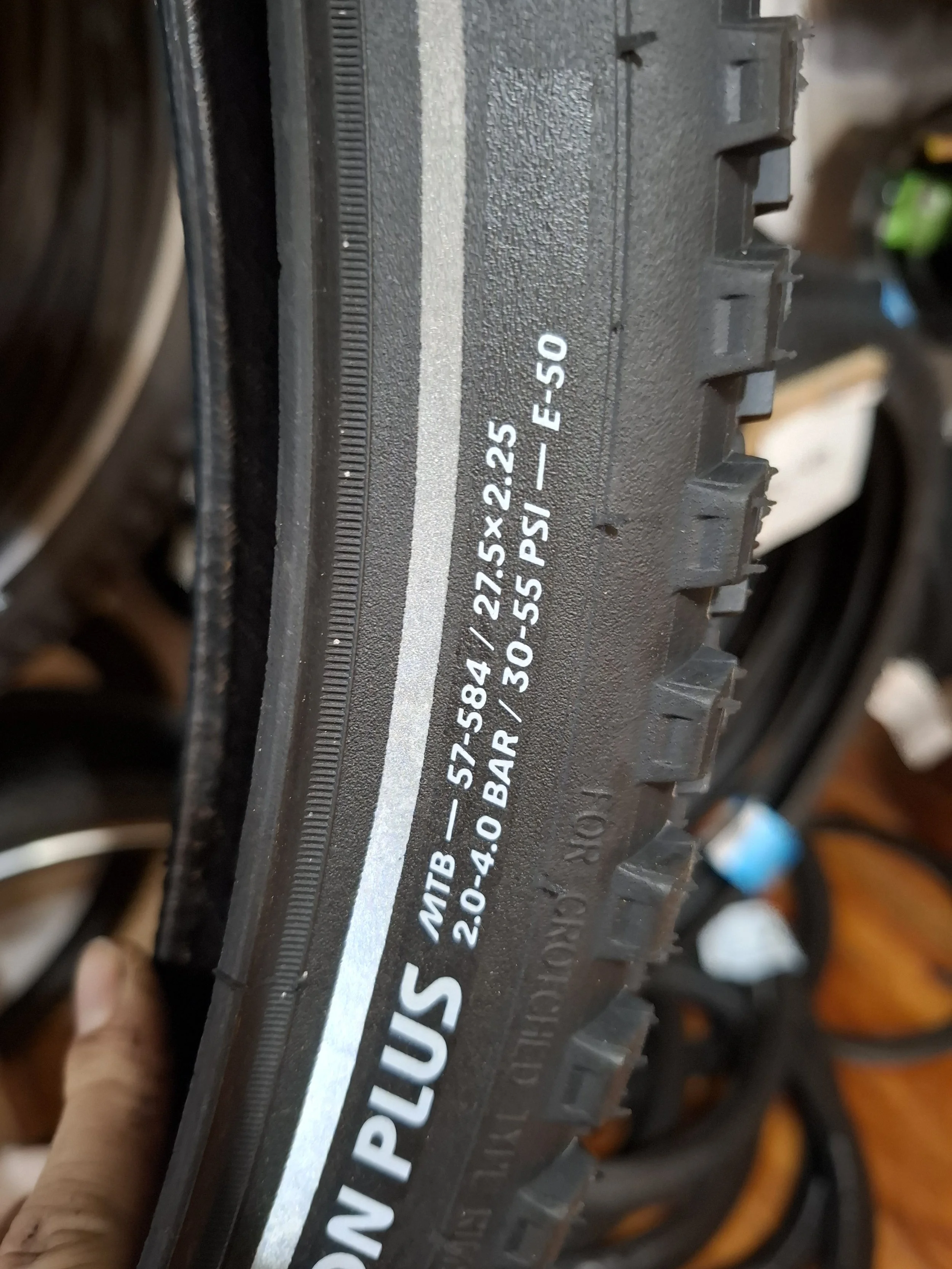
Tire size information painted on the sidewall.
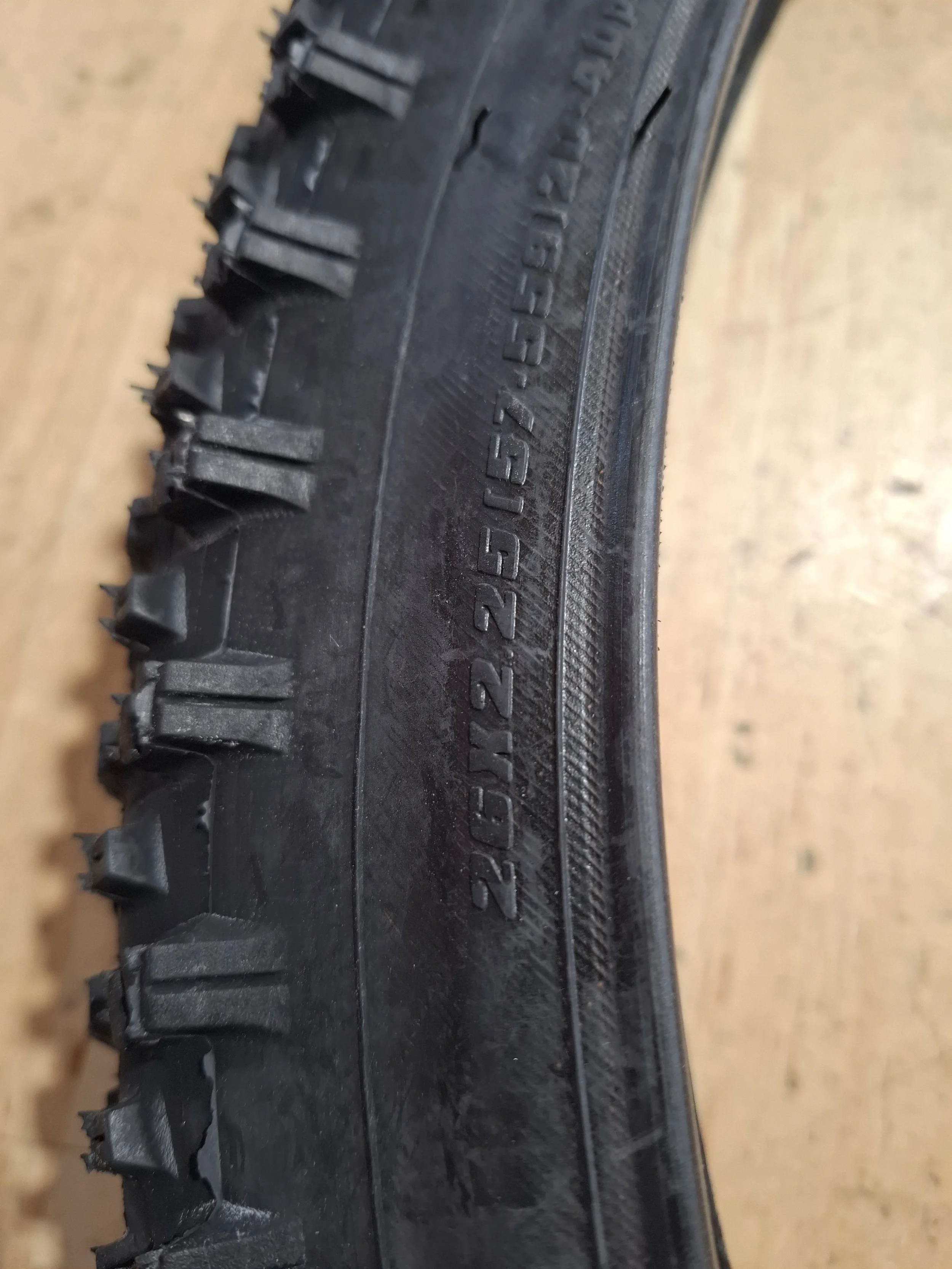
Tire size stamping on sidewall.
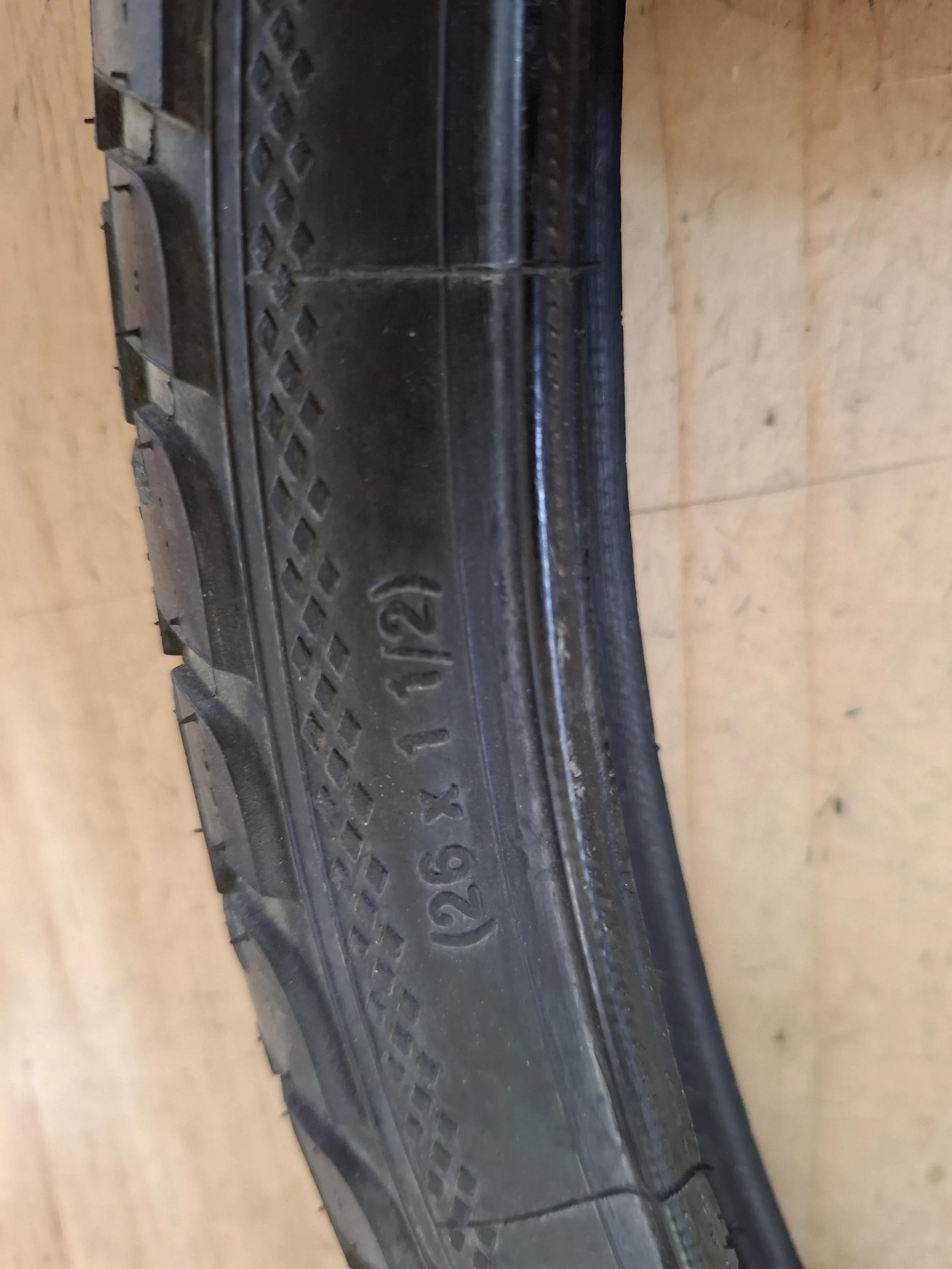
Fractional tire size.
Tubes
Size:
The size of tube you need will be determined by the size of tire you are running. Please refer to the above section if you need to determine your tire size.
Valve:
The two most common styles of valve on bicycle tube are Scraeder and Presta. Scraeder is a thicker valve, the same style you will find on car tires. Presta has a thinner valve stem and requires the valve to be opened by unscrewing the end before adding or removing air.
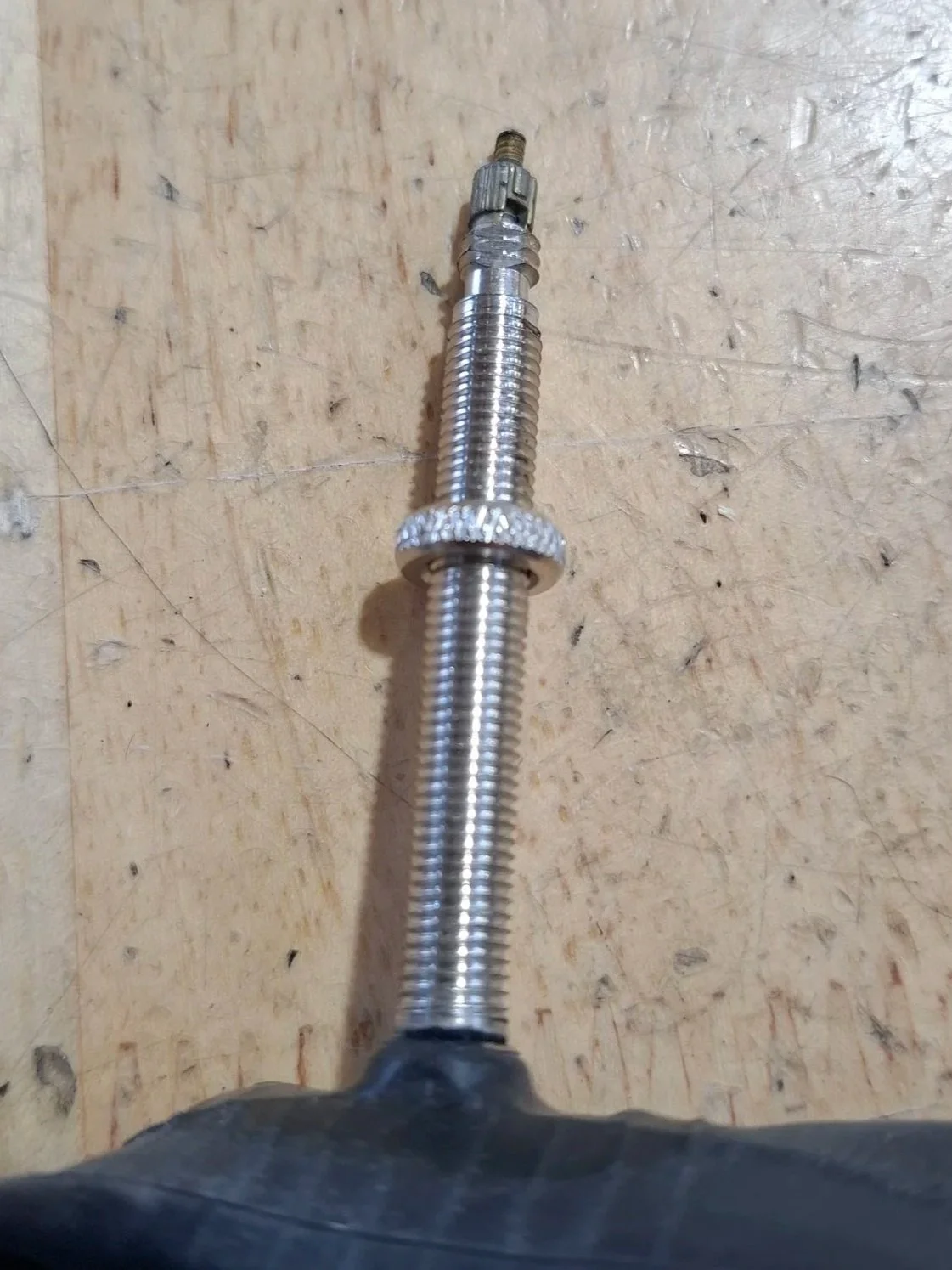
Presta valve with a lock ring and no dust cap.
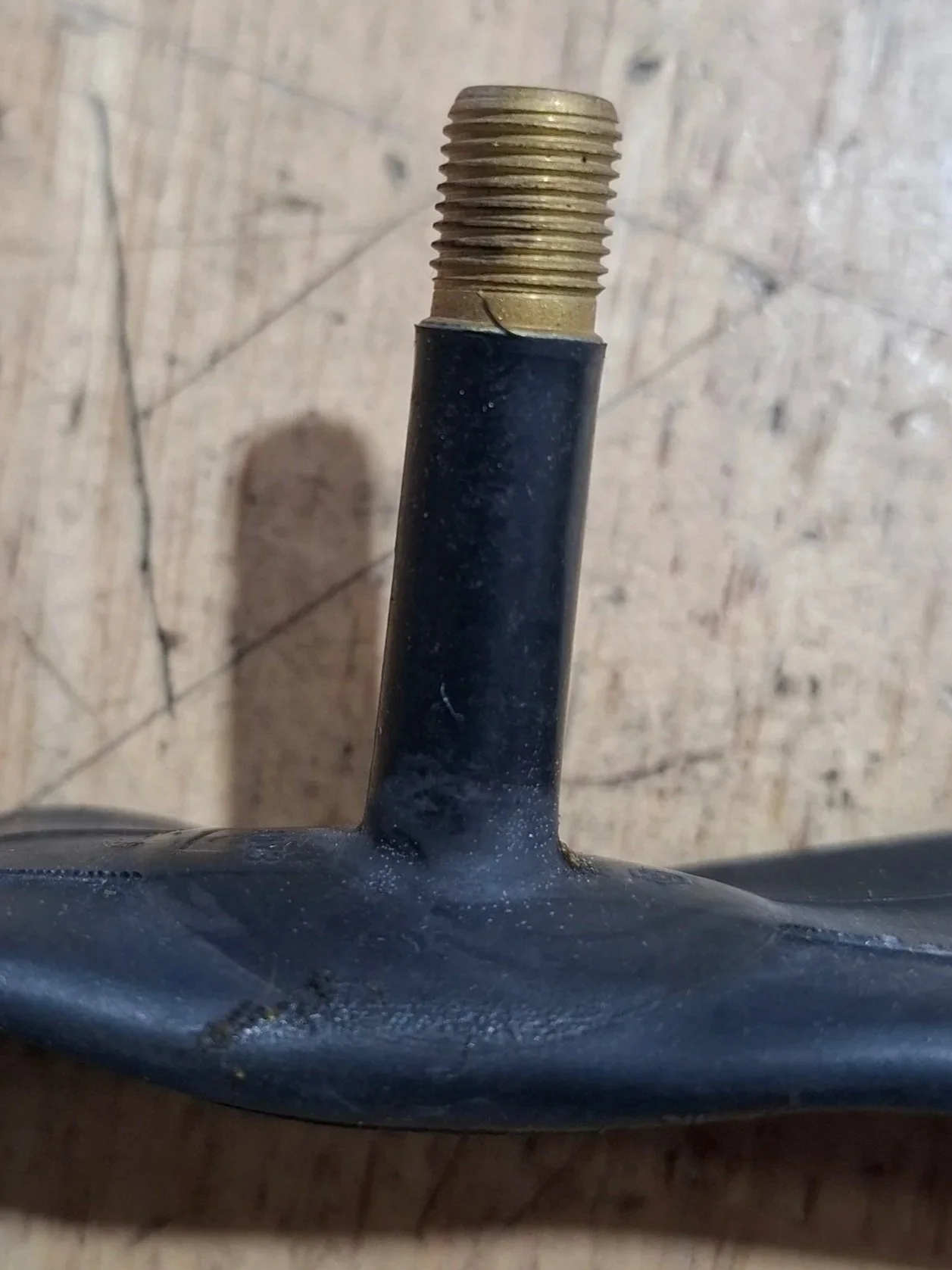
Schraeder valve without a dust cap.
Rim Brakes
Rim brake pads use the outer edge of the rim itself as the braking surface. As such the caliper will straddle the rim. There are a variety of types of rim brakes and corresponding pads. If possible we recommend bringing the old pads in with you so we can match them with the correct replacement. Otherwise a picture of how the pad is attached to the caliper can be useful for picking out the correct pad.
Rim Material:
If you have carbon rims it is important to get the correct pads for your rim. Carbon fibre rims require pads designed specifically for carbon, regular pads may cause damage to the rim.
Note - Road/Tri Bikes:
Some road and triathlon bike brakes have pads that use brake shoes. In this case you do not have to remove the whole pad from the caliper. Simply remove the retaining screw/pin, slide the shoe out and slide in the fresh shoes. Shoes come in versions for aluminum and carbon rims.
Brake Pads
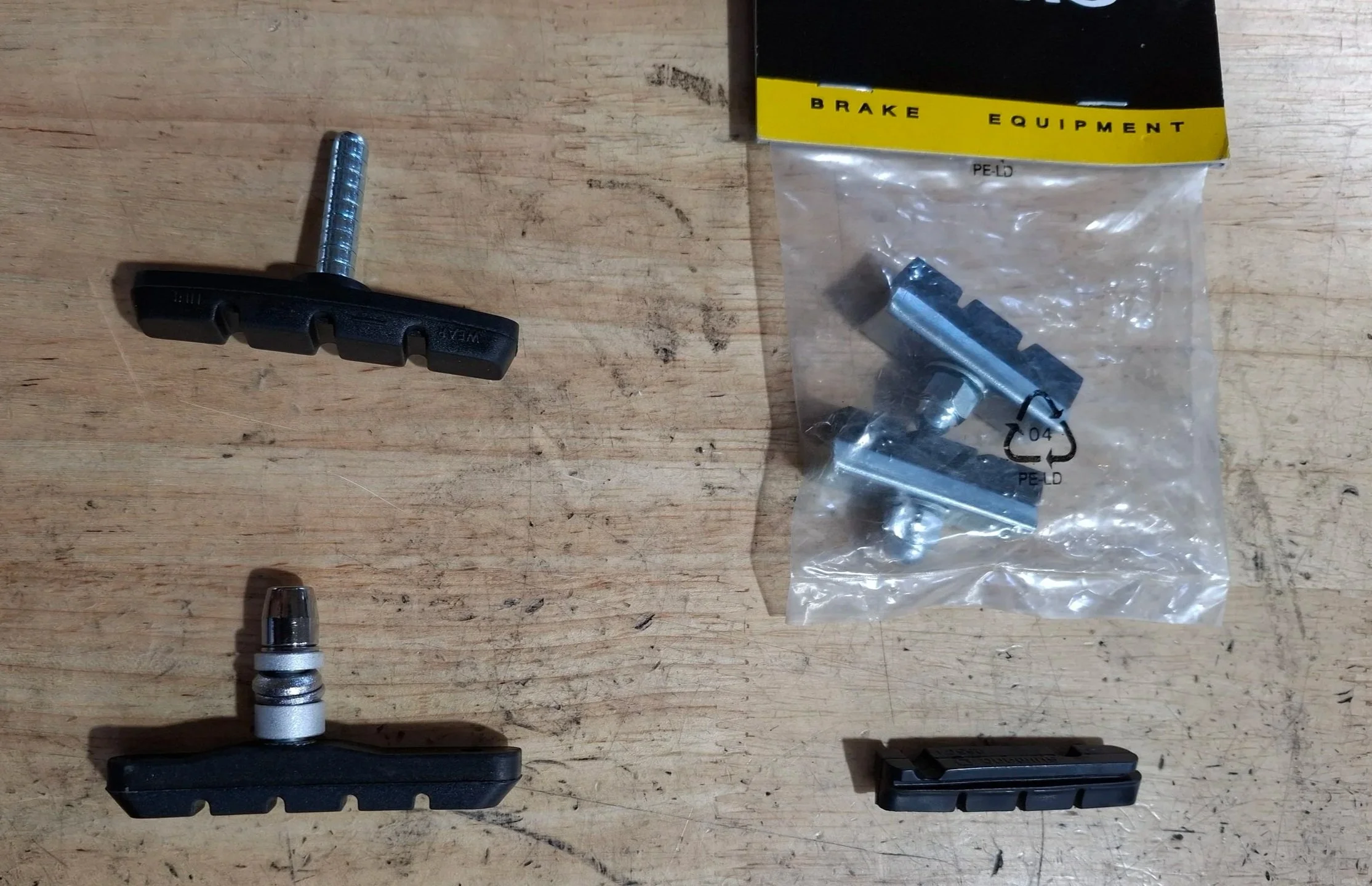
A selection of different styles of rim brake pads.
Disc Brake Pads
Disc brakes use a rotor attached to the hub as the braking surface. Compared to rim brakes they are much more sensitive to contamination. If oil or other lubricants get onto the pads this can decrease braking performance dramatically. Depending on the level of contamination you may also need to replace the rotor in addition to the pads. If you have hydraulic disc brakes and notice oil on the pads when removing them this may be a sign of a damaged/leaking caliper and the brake should be inspected.
Note - Photos of Pads:
Due to the large variety of disc brake pads with similar shapes but slightly different dimensions a photo of the old pads may not be enough to find the correct replacement. For this reason we recommend bringing in the bike or the brake pads you wish to replace.
Pad Material:
Brake pad compounds fall into two main categories, resin and metallic. For most cases either compound will work and the choice is down to rider preference. However there are some rotors that are only designed for resin pads, this will be printed on the rotor itself.
Resin(Organic) - These pads have a slightly softer compound compared to metallic. They can wear out a bit faster but tend to be more quite than metallic pads.
Metal - Made of a harder compound metallic pads offer more bite and last longer but can be noisier than resin pads. If you are doing heavy downhill or riding an e-bike on trails we recommend using metallic pads.
Pad Thickness:
Some brakes are designed to take pads that are thicker 5.0mm pads. Running regular pads in these can cause issues including a lack of braking power or soft feeling brake.
Disc Brake Rotors
If you are replacing brake pads it is recommended that you check the thickness of the rotor against the minimum thickness printed on the rotor and replace as necessary. There are three pieces of information needed to get the correct replacement for you brake rotors size, thickness, and mount.
Thickness:
Most regular rotors are 1.75-1.8mm thick. Some brakes use thicker rotors that are 2.2-2.3mm thick.
Mount:
Disc rotors come in two mount options, center lock and 6-bolt*. You can inspect the hub to find out which one you have. 6-bolt rotors can be changed with the correct tool, most commonly a torx T25 tool. Center lock has two styles of lock rings, internal and external. Internal lock rings can be removed and tightened with a cassette tool. External lock rings use a BB tool.
*There are some 4-bolt rotors but these are rare
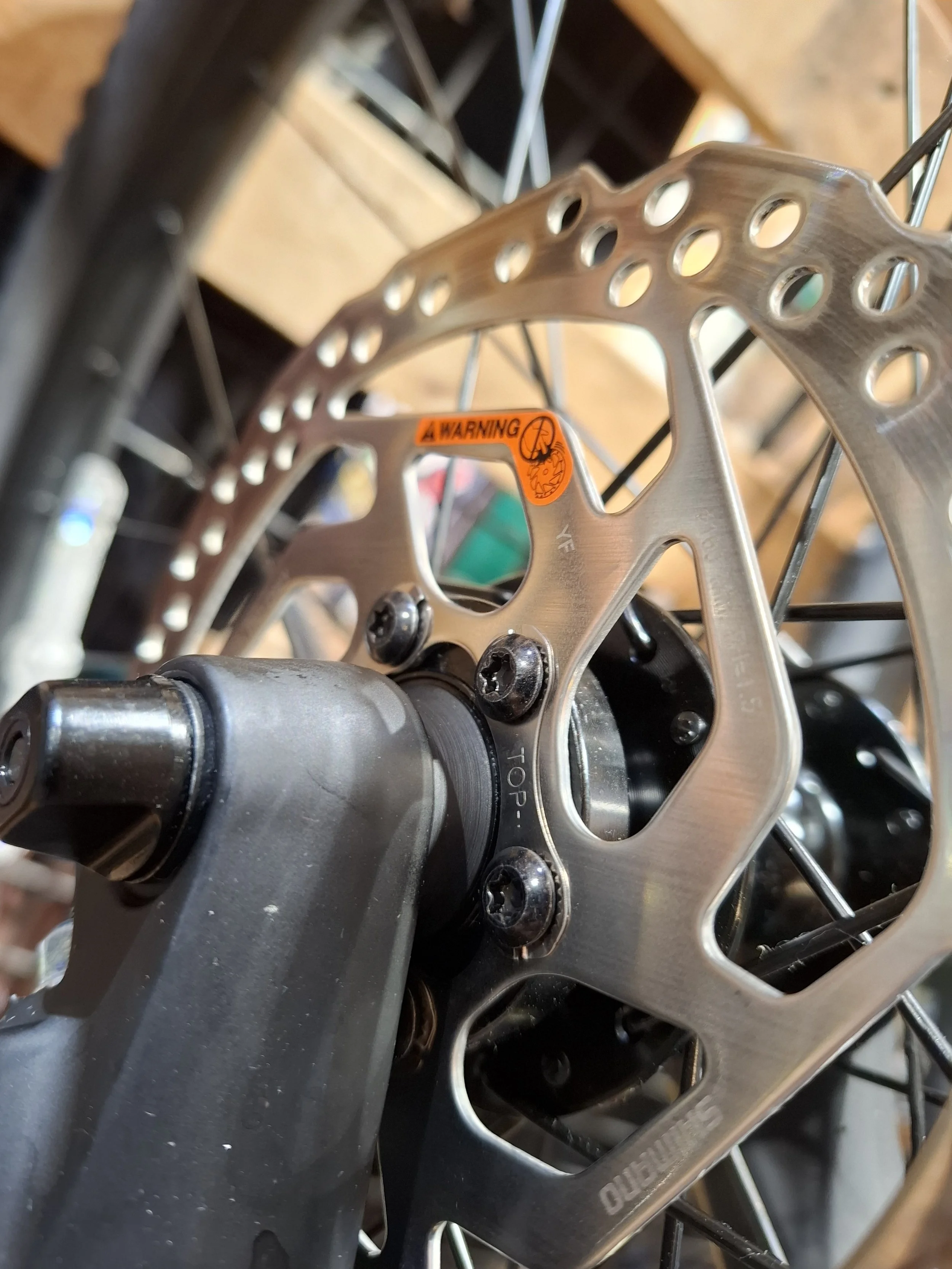
6-bolt disc brake.
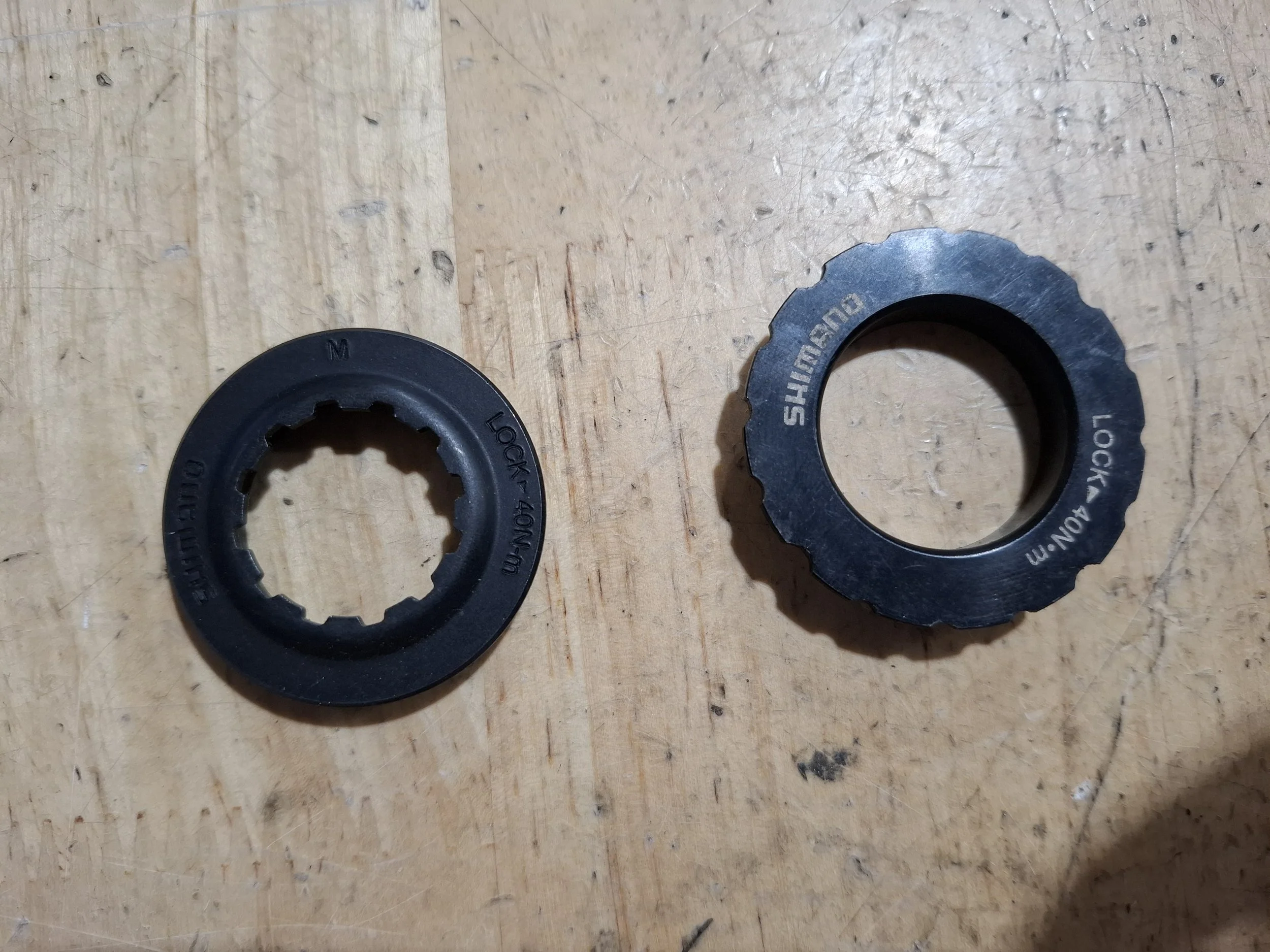
Internal(left) and external(right) lock rings.
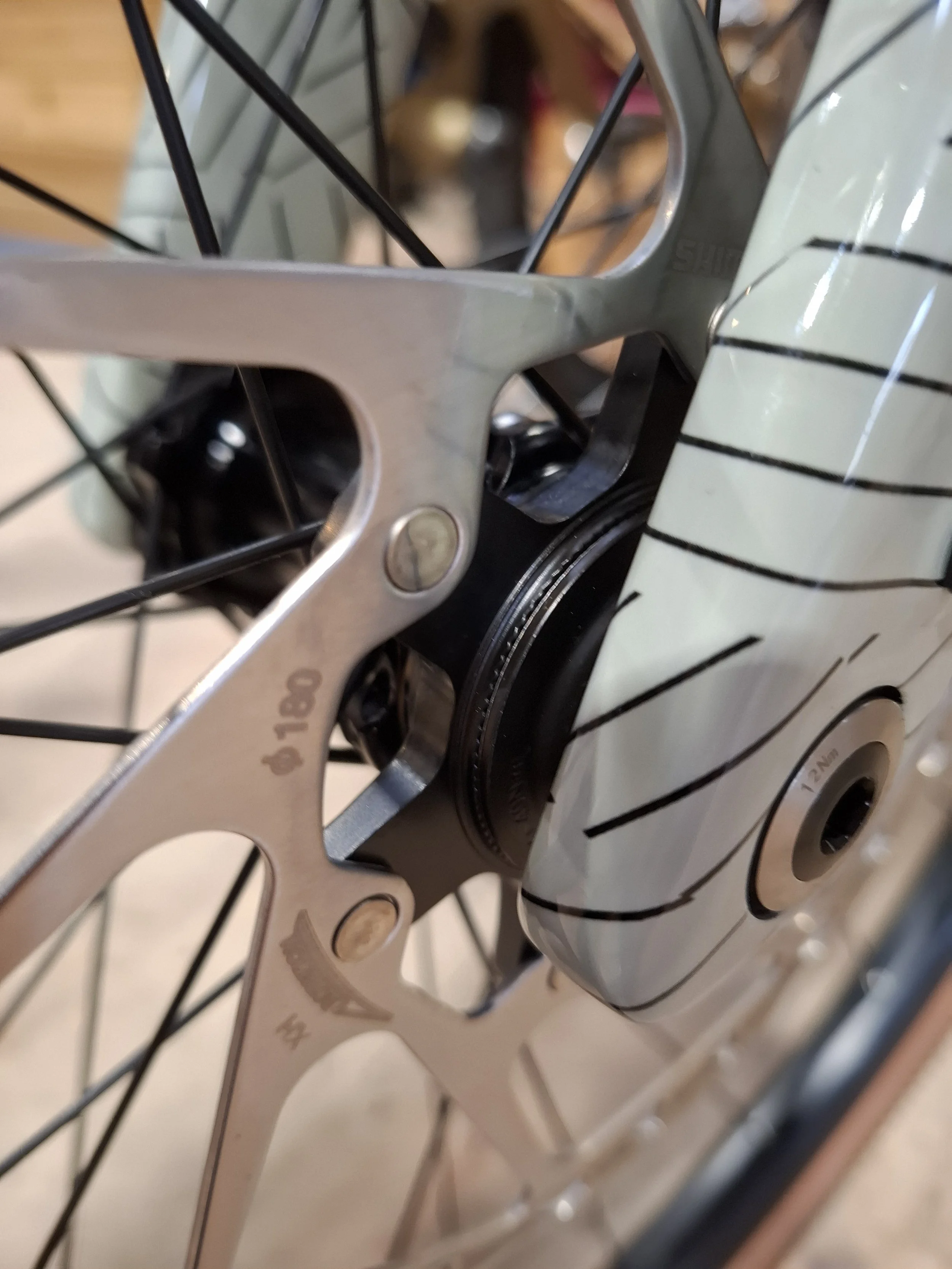
Center lock with an internal lock ring.
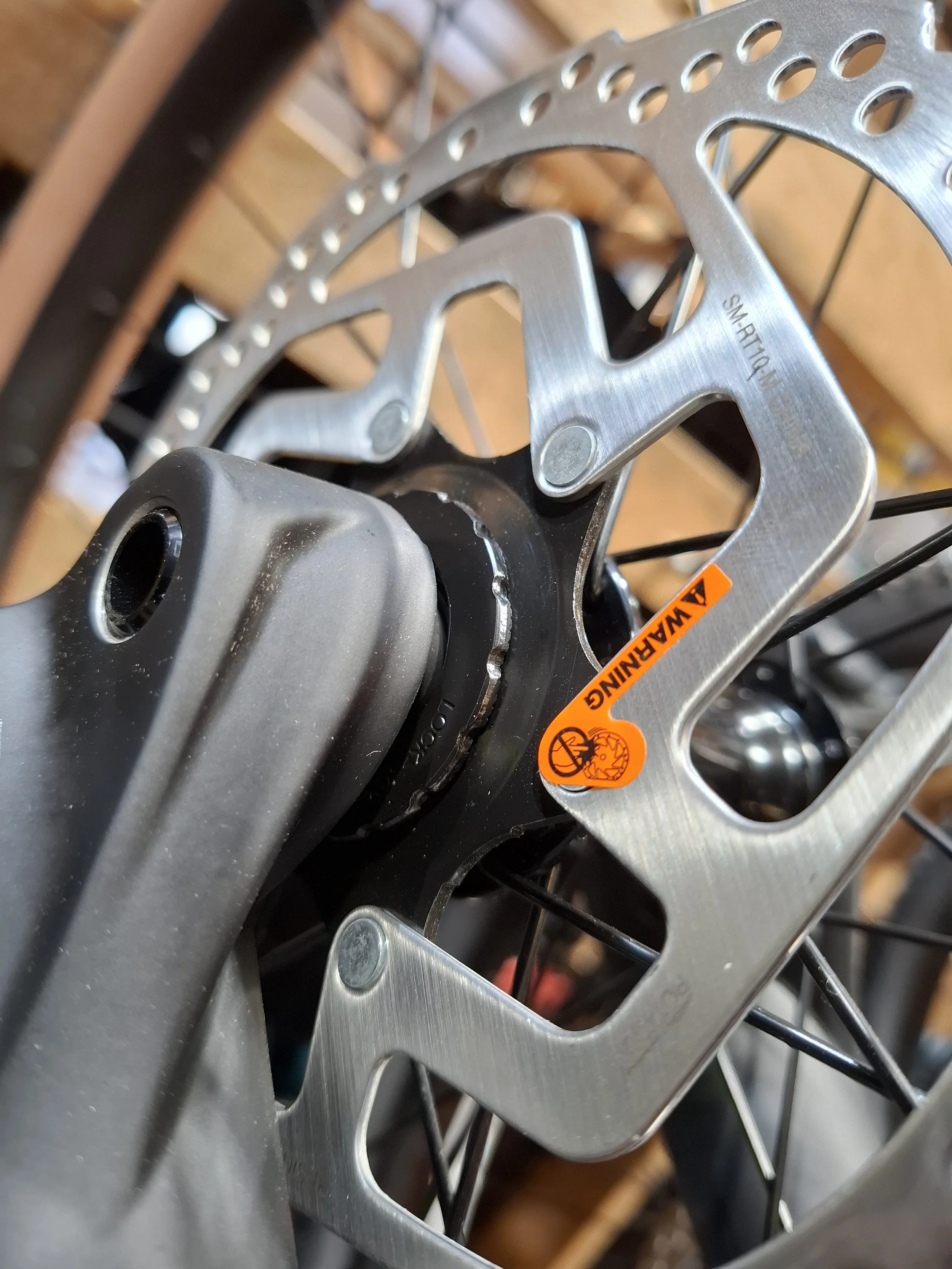
Center lock with an external lock ring.
Size:
Bicycle brake rotors have a range of sizes spanning 140mm, 160mm, 180mm, 200mm, 203mm, and 220mm. The size of the rotor should be printed or stamped onto the rotor itself.
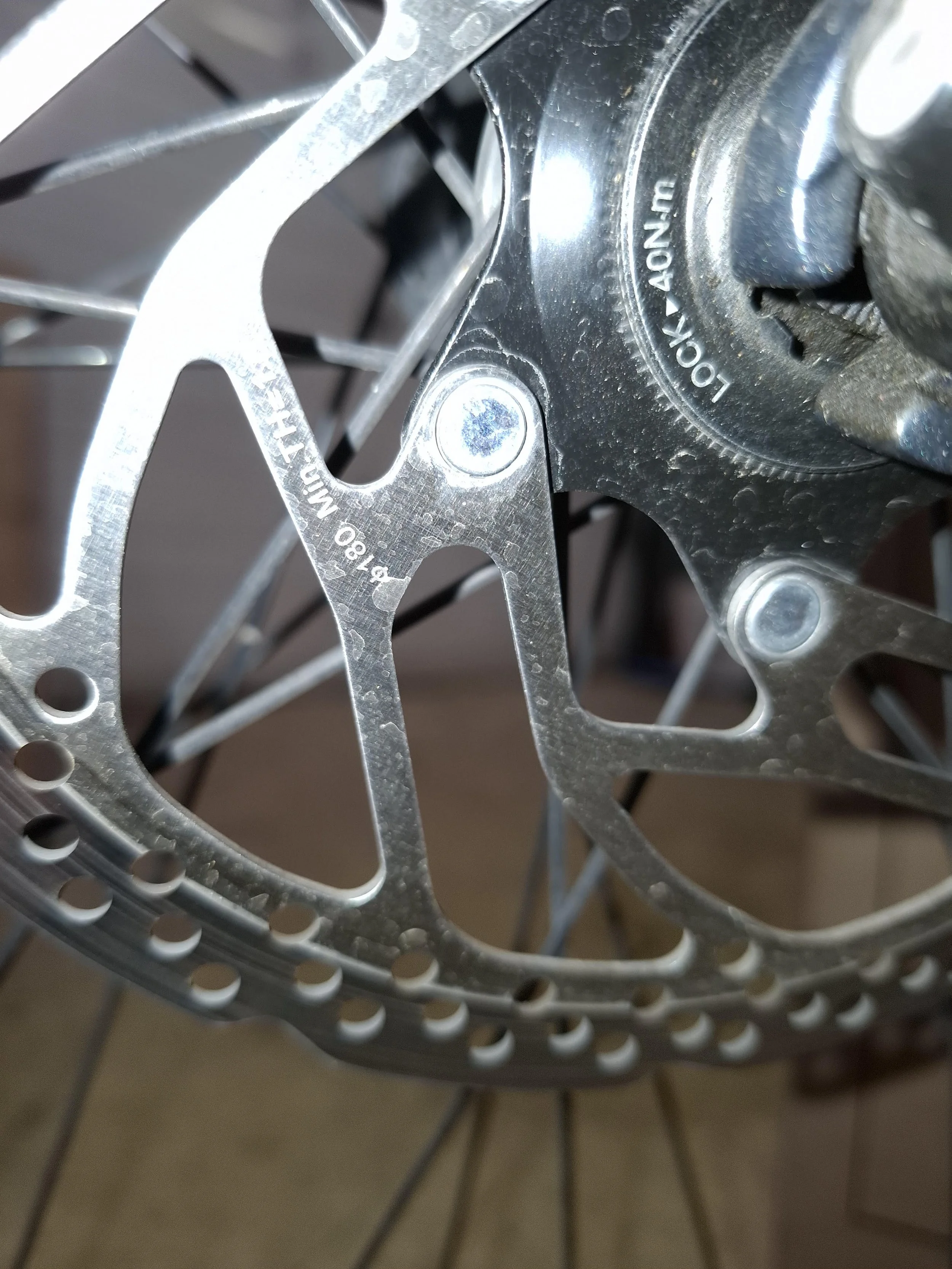
Rotor size on a rotor.
Chain and Drivetrain
Chains
speeds(rear)
drivetrain brand(sram, shimano, etc)
Cassettes
speeds
size(11-34T, 10-51T)
freehub